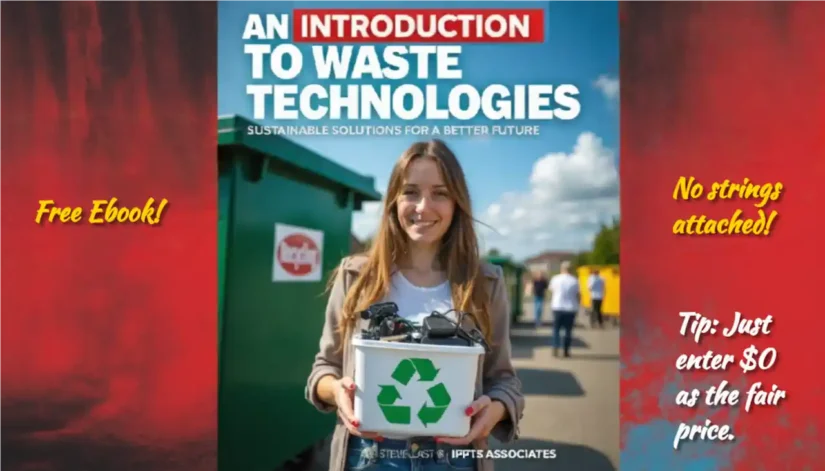
Waste Technologies Ebook – Get Your Free PDF!
Waste Technologies Ebook: You just hit upon one of the Most Interesting Growth Areas in Modern Industry
If you have been searching for a waste technologies ebook, there is a good chance you already sense that waste management is changing fast.
For many people, the subject still sounds old-fashioned.
They think of bins, landfill, refuse trucks, and maybe recycling collections.
But that is only the surface.
Behind modern waste management sits a much bigger and more exciting world of sorting systems, food waste treatment plants, recycling facilities, depackaging equipment, energy recovery systems, repair and reuse businesses, and new technologies designed to recover value from materials that used to be thrown away.
This is why interest in waste technologies is growing.
It is not only an environmental subject.
It is also a business subject, a jobs subject, a skills subject, and a technology subject.
And for many readers, it may even become a new career opportunity.
Introduction
Waste technologies matter because modern society is slowly learning that “throwing things away” is not really a solution.
Materials still have value.
Food waste can be turned into biogas and fertiliser products.
Dry recyclables can be sorted and reprocessed.
Difficult mixed wastes can often be separated into more useful fractions.
Even residual waste has to be managed more intelligently than in the past.
That means the waste sector is no longer just about disposal.
It is increasingly about recovery, treatment, separation, reuse, repair, recycling, and resource management.
This is where a good waste technologies ebook becomes useful.
It helps readers see the bigger picture.
It explains the technologies behind the sector.
And it opens the door to understanding one of the most practical and important industries in the modern economy.
Why Waste Technologies Are So Interesting
Waste technologies sit at the point where engineering, environmental protection, economics, and practical problem-solving all meet.
That alone makes them interesting.
But there is more to it than that.
This is an industry where real things happen.
Machines sort materials.
Plants process food waste.
Technicians keep equipment running.
Operators manage systems.
Engineers solve contamination and throughput problems.
Entrepreneurs create businesses around reuse, repair, depackaging, and specialist recycling.
So unlike some subjects that stay mainly theoretical, waste technologies connect directly to everyday life and visible practical work.
Why the Circular Economy Makes This Even More Important
Many readers have heard the phrase circular economy, but fewer are completely sure what it means.
In simple terms, it means trying to keep materials in use for longer, recover value where possible, reduce waste, and avoid the old take-use-dispose model.
It is still developing.
In many ways, it is still more of a direction of travel than a finished reality.
But that is exactly why the topic is exciting.
When an industry is still developing, it creates opportunity.
New plants are built.
New services appear.
New technologies are introduced.
New training needs arise.
And new jobs are created.
That means waste technologies are not just about managing rubbish.
They are about helping build the systems that a more resource-efficient economy will need.
Waste Technologies Can Lead to Good Jobs
One of the most overlooked things about the waste sector is that it can create a wide range of worthwhile jobs.
Some are technical jobs.
Some are management jobs.
Some are engineering jobs.
Some are maintenance and operations jobs.
Some are local practical jobs for people who are good with their hands and enjoy fixing, improving, maintaining, dismantling, sorting, or rebuilding things.
That matters because many industries now talk about sustainability in very abstract terms.
Waste technologies are different.
They often create visible, local, place-based work.
Facilities need staff.
Equipment needs servicing.
Materials need sorting.
Recovered products need moving and marketing.
Repair and reuse activities need skilled, practical workers.
In other words, this is not just a policy topic.
It is a real economy topic.
Why Businesses Keep Emerging in This Sector
Waste technologies also attract interest because they create room for new business ideas.
Some businesses focus on specialist recycling.
Some focus on food waste treatment.
Some build equipment.
Some operate plants.
Some work in reuse and repair.
Some develop front-end separation technologies for difficult waste streams.
Some focus on consultancy, compliance, design, maintenance, or training.
As the wider circular economy develops, more niche opportunities are likely to appear as well.
That is why learning about waste technologies can be valuable even for readers who are not currently in the waste sector.
It may help them spot opportunities they had not previously considered.
Why an Ebook Is a Good Way to Start Learning
A good waste technologies ebook can save a lot of time.
Online information is often scattered.
Some of it is too academic.
Some of it is too promotional.
Some of it assumes too much prior knowledge.
And some of it only explains one technology at a time.
A short ebook can give readers a clearer overview.
It can explain the main technologies in plain English.
It can show how different facilities fit together.
And it can help people move from general curiosity to real understanding much faster.
What You Can Learn from a Waste Technologies Ebook
A strong introductory ebook can help you understand:
- What Materials Recovery Facilities do
- How composting and anaerobic digestion treat organic wastes
- What Mechanical Biological Treatment means in practice
- How Energy from Waste fits into the bigger picture
- Why pyrolysis and gasification are often discussed differently from mainstream treatment systems
- Why depackaging and front-end separation are becoming more important
- Why modern waste systems rely on combinations of technologies, not one universal answer
That makes an introductory ebook useful for students, jobseekers, waste workers, business readers, and anyone curious about how the sector really works.
Why This Topic Deserves More Attention
There is also a broader reason why waste technologies deserve more attention.
The way a society handles waste says a great deal about how well it uses resources.
If valuable materials are constantly lost, landfilled, burnt unnecessarily, or poorly separated, that usually means the wider system is underperforming.
But when waste is handled intelligently, more value can be recovered, more jobs can be supported, and more environmental harm can be avoided.
That is why learning about waste technologies is more than a technical hobby.
It is a way of understanding one of the most practical foundations of a better resource economy.
Key Takeaways
- A waste technologies ebook is a fast way to understand how modern waste treatment and recycling systems really work.
- Waste technologies are about far more than disposal. They include sorting, separation, biological treatment, energy recovery, depackaging, reuse, and resource recovery.
- The circular economy is creating new interest in this field because better material recovery needs better systems and better technologies.
- The sector can create good local jobs for engineers, operators, technicians, managers, and practical hands-on workers.
- Waste technologies can also open the door to new business ideas in recycling, treatment, repair, separation, and specialist recovery.
- A short introductory ebook is one of the easiest ways to start learning the basics without getting lost in jargon.
Download the Free Waste Technologies Ebook
If you want a simple and accessible starting point, download the free ebook:
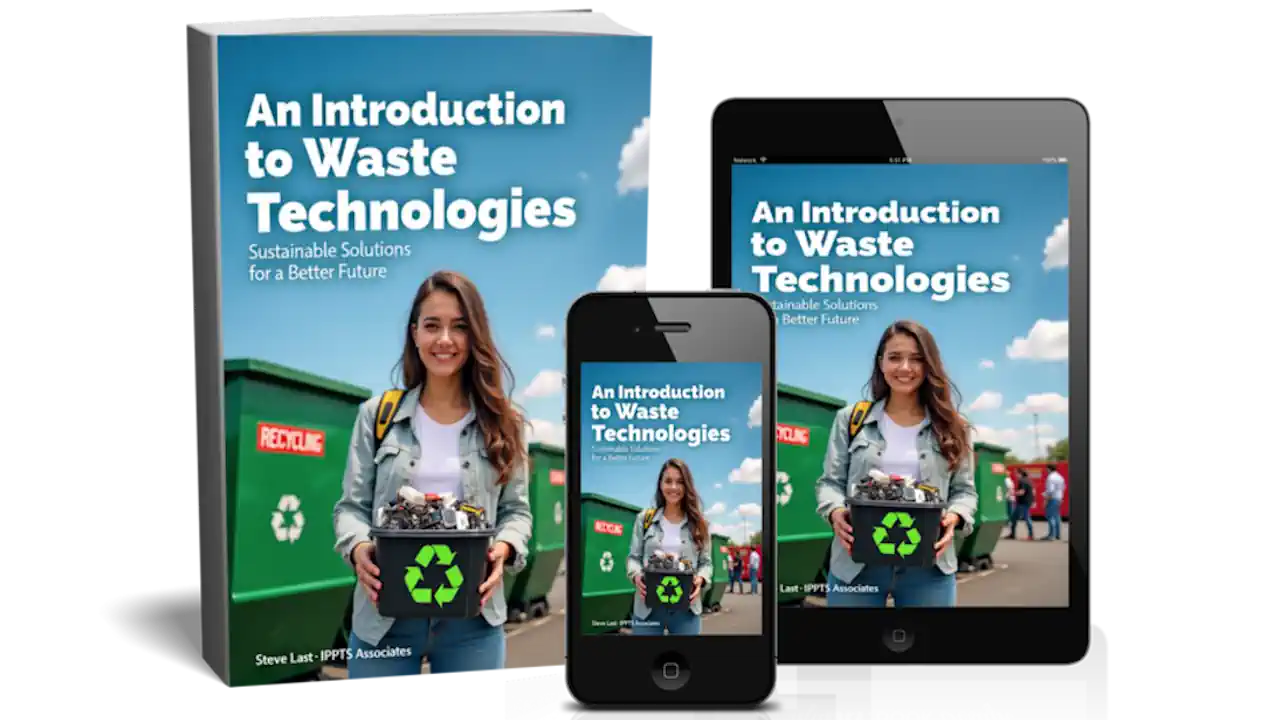
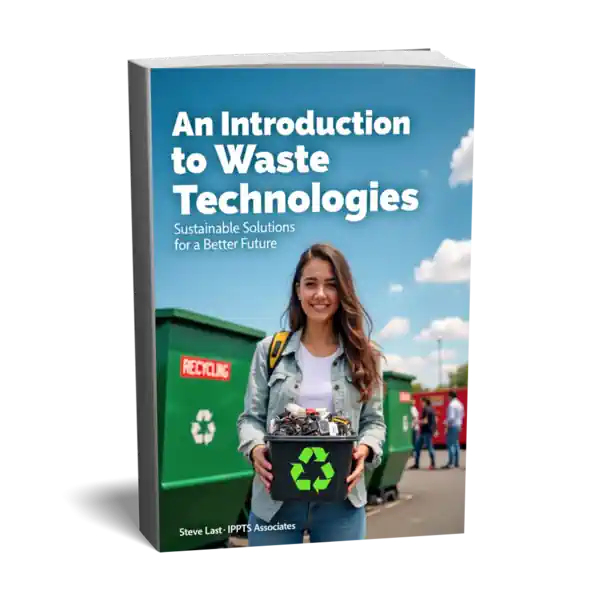
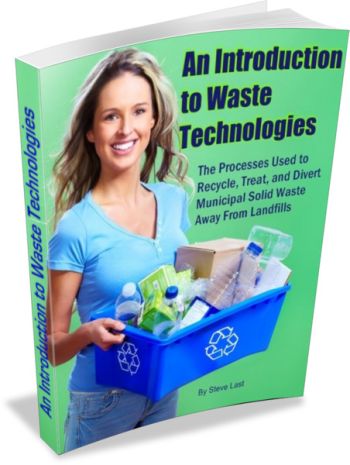
An Introduction to Waste Technologies
It explains the main technologies used to recycle, treat, and divert municipal waste away from landfills in clear language and gives you a practical introduction to this increasingly important field.
Click here to download the free waste technologies ebook
If you want to go deeper after that, you can then move on to the more advanced companion guide:
Municipal Waste Treatment Technologies 2026
All New Second Edition for 2026
The first version of this book was written in 2008. It sold well, but the industry has developed hugely, so we rewrote it!
Here is the cover of the first version from 2008:
FAQs
What is a waste technologies ebook?
A waste technologies ebook is a digital guide that explains the systems and processes used to sort, recycle, treat, and recover value from waste materials.
Who should read a waste technologies ebook?
It can be useful for students, waste professionals, engineers, local authority staff, jobseekers, business readers, and anyone interested in recycling, resource recovery, and the circular economy.
Why are waste technologies important?
They help reduce landfill dependence, recover useful materials, treat biodegradable wastes more effectively, and support a more resource-efficient economy.
Are waste technologies only relevant to large companies?
No. They are relevant to local authorities, plant operators, maintenance teams, consultants, specialist recyclers, repair businesses, and smaller firms working in recovery and reuse.
Can learning about waste technologies help with career opportunities?
Yes. The sector includes technical, practical, operational, managerial, and engineering roles, and it is likely to remain important as resource recovery and circular economy systems continue to develop.
Is the circular economy already fully established?
No. It is still developing. That is one reason why the subject is so interesting, because developing systems often create new jobs, businesses, and opportunities.
Where can I get a free waste technologies ebook?
You can download An Introduction to Waste Technologies here: free waste technologies ebook download.
Take Action Now – It’ll Cost You Nothing (Tip: Just Enter $0 as your fair price!)
If you want to understand the technologies behind modern waste management, recycling, and the circular economy, this is the place to start.